
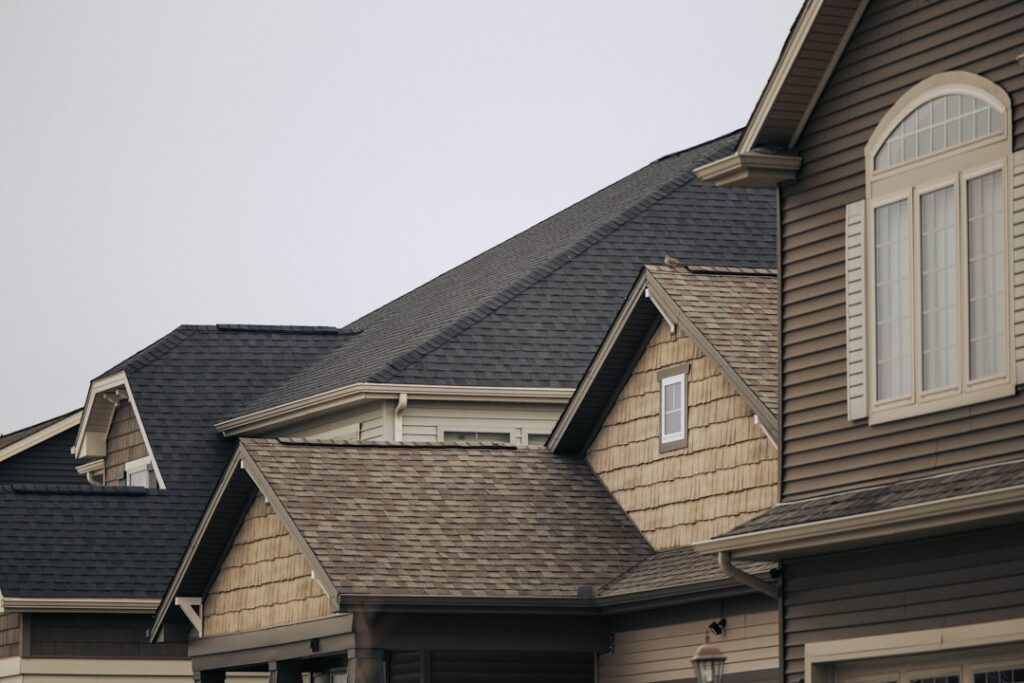
Choosing a roof color is partly an aesthetic decision, but it also affects how a home fits its surroundings, how large the roof appears, and how well the exterior looks as materials age. For homeowners in Henrietta, NY, seasonal snow, cloudy winter light, leafy summers, and a wide range of housing styles all deserve consideration.
Which roof colors work best with common home exteriors?
The most reliable approach is to coordinate the roof with the home’s siding, brick, stone, trim, and other permanent features. A roof should support the exterior color scheme rather than compete with it.
Common combinations include:
- Gray roofs with white, blue, gray, or cool-toned siding
- Brown or weathered-brown roofs with tan, beige, cream, green, or earth-tone exteriors
- Black or deep charcoal roofs with white siding, red brick, modern trim, or strong architectural contrast
- Blended shingles with multiple tones when the exterior already contains varied colors
- Dark green or muted red roofs when those colors appear elsewhere in the home’s trim, shutters, doors, or masonry
If a house has brick or stone, examine the less obvious colors within the masonry. A roof does not need to match the dominant brick color exactly. It may coordinate better with a subtle gray, brown, cream, or charcoal tone found among the individual pieces.
Should a roof be lighter or darker than the siding?
A roof that is darker than the siding is the most common choice because it visually anchors the home. Darker roofing can also make a light-colored exterior look more defined.
A lighter roof may help a house appear less visually heavy, especially when the siding, trim, and roof have similar tones. However, a very light roof can make a low-pitched or expansive roof more noticeable because the surface reflects more attention.
The best contrast depends on the structure:
- Light siding with a dark roof creates a traditional, clearly defined appearance.
- Medium siding with a medium-dark roof produces a quieter, more blended exterior.
- Dark siding with a lighter or mid-tone roof can prevent the home from looking overly heavy.
- Similar siding and roof colors create a subtle appearance but may reduce visible contrast around rooflines.
Color samples should be viewed against the actual siding and trim, not judged by looking at a shingle sample alone.
How does roof color affect heat and energy use?
Dark roofing generally absorbs more solar heat than light roofing, while lighter colors reflect more sunlight. This difference can influence attic and roof-surface temperatures, particularly during sunny summer weather.
The effect on whole-house energy use is often smaller than homeowners expect because insulation, ventilation, air sealing, attic design, and window exposure usually have a greater influence. A roof color alone will not correct an inefficient attic or poorly insulated upper floor.
In the local climate, the decision is a balance rather than a simple rule. Summers can bring strong sunlight and humid conditions, while winters bring freezing temperatures, snow, and repeated freeze-thaw cycles. A homeowner choosing a dark roof for appearance should still pay attention to proper attic ventilation and insulation.
What roof colors look good in a snowy, four-season climate?
In an area with regular winter snow, roof color can affect how dirt, algae, moss, and weathering appear between cleanings. Very dark roofs may show light-colored debris or salt residue more clearly. Very light roofs can show dark organic staining, fallen leaves, or shadow lines.
Blended colors often conceal minor changes better than solid, uniform tones. A shingle with variations of gray, brown, charcoal, or muted earth colors may continue to look balanced as the roof encounters snow, rain, pollen, and falling leaves.
Snow itself can make a roof look temporarily lighter. A color that seems appropriately deep in summer may appear nearly black under a layer of white snow. Viewing samples during different seasons, or at least under both direct sun and cloudy conditions, can prevent surprises.
Does the size and shape of the roof change the color decision?
Yes. Roof color can influence how prominent the roof appears.
A dark roof usually looks visually heavier and may make a large roof plane appear more dominant. That can work well on homes with broad, simple rooflines, but it may overwhelm a small house with limited wall area.
A lighter or more varied roof can soften a large roof surface. It may also help separate multiple roof sections on homes with dormers, intersecting slopes, porches, or additions.
Complex rooflines deserve special attention because different slopes receive different amounts of sunlight. A color that appears medium gray on one plane may look much darker on a shaded slope. Strongly variegated shingles can make a complicated roof appear busier, while a more consistent color may create a calmer appearance.
How should trim, gutters, and exterior details be considered?
Roof color should be evaluated as part of the entire exterior, including:
- Gutters and downspouts
- Fascia and soffits
- Window trim
- Shutters
- Front doors
- Garage doors
- Porches and decks
- Brick, stone, or foundation materials

Matching the roof to the gutters is not required. Gutters often blend with the trim or siding instead. A charcoal roof with white trim and dark gutters may look more deliberate than trying to match every component.
A roof can also coordinate with a front door or shutters without being the same color. Repeating a color in small, controlled areas usually looks more balanced than adding several unrelated accent colors.
Are there roof color restrictions in Henrietta?
Most homeowners can choose from a broad range of roofing colors, but restrictions may apply to particular properties, neighborhoods, historic areas, planned developments, or architectural review processes. Building and zoning requirements can also change over time.
Before finalizing a color, review any property-specific rules that apply to the home. This is especially relevant if the house is located in a designated historic district, is subject to neighborhood design standards, or is part of a development with recorded restrictions.
The color itself is only one part of compliance. Roofing materials, installation methods, flashing, ventilation, and fire-related requirements may also be regulated.
What is the safest way to compare roof colors?
Small samples can be misleading. A roof covers a large area, and the apparent color changes with distance, weather, and surrounding materials.
A practical comparison process is:
- Place full-size samples beside the siding, brick, trim, and foundation.
- View them in morning, afternoon, and overcast light.
- Step back far enough to see the color as part of the whole house.
- Compare the samples against neighboring homes without copying them exactly.
- Look at roofs that have been in place for several years to see how colors weather.
- Consider how the color will look with autumn leaves, winter snow, and summer greenery.
- Confirm that replacement materials will be available if a repair is needed later.
Digital renderings can help visualize broad changes, but screen colors are not dependable enough for a final decision. Physical samples remain more useful.
Which roof color is the most practical choice?
For many homes, the most practical choice is a medium-to-dark gray, brown, or blended neutral that complements the exterior without creating excessive contrast. These colors tend to work across changing seasons and are less dependent on a particular paint trend.
That does not mean every home should have a neutral roof. A muted green, red, or blue-gray can be appropriate when it connects clearly with existing exterior details. The strongest choices usually share three qualities: they suit the home’s architecture, coordinate with permanent materials, and remain appealing under different lighting and weather conditions.
A roof is a long-term visual feature. Selecting a color based on the whole property—not just a small sample or a short-lived trend—usually produces the most dependable result.
