
Why tree limbs deserve attention in Henrietta, NY
Tree limbs can damage a roof gradually or suddenly. A branch may scrape away protective roofing granules, trap moisture against shingles, puncture the roof during a storm, or fall through the roof deck. Even limbs that never break can create maintenance problems when they hang over the house.
In Henrietta, NY, roof exposure changes throughout the year. Heavy snow and ice can add weight to branches, while freeze-thaw cycles, wind, and wet spring conditions can weaken dead or partially damaged limbs. Summer growth may also bring branches into contact with roof surfaces, gutters, chimneys, or vents.
The risk depends on more than the size of a tree. A small branch rubbing against shingles for months can cause more wear than a larger limb that remains stable and clear of the roof.
How can a tree limb damage shingles?
The most common problem is repeated contact. As wind moves a branch back and forth, it can scrape the upper surface of asphalt shingles. This may remove granules, expose the shingle mat, and shorten the roof covering’s service life.
Damage may appear as:
- Bare or unusually smooth patches on shingles
- Scraped edges or lifted tabs
- Shingles that are cracked, torn, or folded
- Dark lines where a branch has rubbed repeatedly
- Granules collecting in gutters or at the base of downspouts
A branch does not need to break through the roof to cause a leak. Once the shingle surface or the seals between shingles are disturbed, water may reach underlayment or the roof deck during wind-driven rain.
Branches can also knock loose flashing around roof penetrations. Areas around chimneys, plumbing vents, skylights, and roof-to-wall intersections are especially sensitive because they already depend on carefully sealed joints.
What happens when a limb falls on the roof?
A falling limb can cause visible structural damage, but the full extent is not always obvious from the ground. The impact may break shingles, crack the roof deck, bend flashing, damage rafters, or disturb attic insulation and wiring.
After a limb strikes the roof, look for signs such as:
- A depression, hole, or unusual sagging area
- Shingles scattered in the yard or gutter
- Daylight visible from the attic
- Water stains on ceilings or upper walls
- Cracked drywall near the roofline
- A damaged vent, chimney cap, gutter, or fascia board
Water may not appear indoors immediately. Roof materials can sometimes resist rain temporarily, while small openings allow moisture to enter only during certain wind directions or heavier storms. A dry ceiling shortly after impact does not prove that the roof is undamaged.
If a large limb remains on the roof, avoid walking beneath it or attempting to remove it from the roof surface. The branch may be unstable, and damaged roofing can be slippery or unable to support a person’s weight. If electrical wires are involved, keep away from the area and treat the situation as an electrical hazard.
Can branches cause roof leaks without falling?
Yes. Overhanging branches can contribute to leaks in several less obvious ways.
Leaves, twigs, and bark may collect in valleys, behind chimneys, or near roof penetrations. These materials hold moisture against roofing and can interfere with drainage. When water backs up behind debris, it may flow beneath shingles or around flashing.
Tree debris can also fill gutters and downspouts. Clogged drainage allows water to overflow against fascia boards, siding, soffits, and foundation areas. During freezing weather, trapped water can turn to ice and place additional stress on gutter systems and roof edges.
Branches that shade a roof heavily may also slow drying after rain or snowmelt. Shade alone does not usually create a roof failure, but persistent dampness can encourage moss or algae growth and make existing defects harder to detect.
How do winter conditions increase the risk?
Winter weather can make tree-related roof hazards more serious. Snow and ice add weight to limbs, especially when branches are already weakened, split, or carrying deadwood. Wind can then move overloaded branches against the roof or cause them to fail.
Freeze-thaw cycles create another concern. Moisture enters cracks in branches, freezes, expands, and can worsen existing weaknesses. A limb that appeared stable during a mild inspection may become hazardous after repeated freezing weather.
Roof edges and gutters may also be vulnerable to falling ice-coated twigs. In addition to damaging shingles, impact can bend metal flashing, loosen gutters, or break vent components.
Residents should pay particular attention after heavy snow, ice accumulation, strong wind, or a rapid change from freezing to warmer conditions. These are times when trees and roofing systems may both experience unusual stress.
How often should trees near a house be checked?
A practical approach is to inspect trees near the roof at least twice a year and after major storms. The inspection should look for branches that are touching the roof, dead limbs, cracks at branch unions, hanging limbs, and trees that lean toward the structure.
Warning signs include:
- Dead branches with no buds or leaves during the growing season
- Loose bark or large cavities
- Cracks where major limbs join the trunk
- Limbs resting on the roof or utility lines
- Mushrooms or decay near the base of a tree
- New leaning, exposed roots, or soil movement
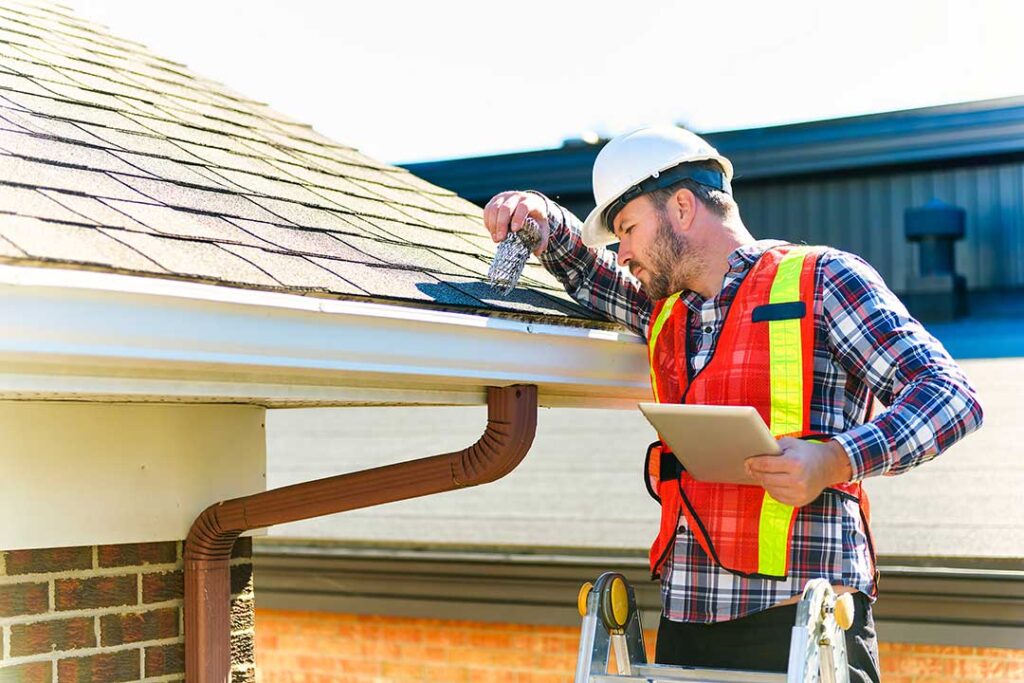
Roof inspections should also be part of seasonal maintenance. From the ground, binoculars can help identify missing shingles, damaged flashing, clogged valleys, and branches that have begun to rub. Attic checks can reveal damp insulation, staining, or daylight around roof penetrations.
Tree removal or pruning becomes a safety matter when limbs are large, elevated, close to electrical lines, or under tension. Cutting a branch incorrectly can cause it to swing, split, or fall in an unexpected direction. Roof access also adds fall risk, particularly when shingles are wet, icy, or weakened.
Should a branch touching the roof be removed immediately?
A branch touching the roof should not be ignored, but the urgency depends on its condition and location. A small flexible twig may be a maintenance issue, while a cracked limb over a bedroom or a branch resting on shingles may present an immediate hazard.
Prompt attention is warranted when:
- The limb is cracked, split, or partially detached
- The branch is heavy with snow or ice
- It is touching electrical wires
- It has already damaged shingles or flashing
- Water is entering the attic or living space
- The tree or limb is leaning toward the structure
Do not pull a branch off the roof if it is caught in wires, supporting other limbs, or under visible tension. Avoid using ladders near unstable branches. Temporary protection from inside the attic may help limit water damage during rain, but puncturing or cutting roofing materials without understanding the damage can make conditions worse.
What should homeowners document after storm damage?
Photographs taken from a safe location can help show the condition of the roof, tree, gutters, and surrounding ground. Useful documentation includes the fallen limb, visible roof openings, displaced shingles, interior water stains, and the approximate date of the storm.
Keep damaged materials in place when safe to do so, except where they create an immediate hazard. Removing evidence or making extensive temporary repairs may make it harder to understand how the damage occurred. If water is entering, containers and towels can reduce interior damage, while wet electrical fixtures should be avoided.
The most effective prevention is simple: keep branches from rubbing against roofing, monitor trees for structural warning signs, keep roof drainage paths clear, and treat storm-damaged limbs as potential hazards rather than ordinary yard debris.
